Safety-first survival and learn-to-swim lessons that build real confidence.
Individualized, adaptive swim instruction tailored to each swimmer’s needs.
Confidence and safety at any age.
Celebrate and make a splash.
Warm-water fun for practice and play.
Catch the Wave Swim Club
Adaptive swim lessons designed to support each child’s comfort, confidence, and individual needs.
Start with a short intake so we can understand your swimmer’s needs. We’ll follow up with exact pricing, availability, and a personalized lesson recommendation for your selected location.
Want to see the best adaptive lesson options for your swimmer?
Fill out the short Adaptive Lessons Intake Form, and our team will review your swimmer’s needs and send you the most appropriate lesson recommendations for your chosen location
At Catch the Wave, we teach the same survival-first BraveSwim™ skills used in all our programs. The difference lies in our approach — individualized pacing, sensory-aware strategies, simple communication, and trust-based teaching designed for swimmers who benefit from more personalized support.
Private lessons are typically recommended for adaptive swimmers because they offer a calmer, more predictable environment.
Some swimmers may later transition into a regular group class when they show readiness, and our team will guide that process to ensure it’s supportive and successful.
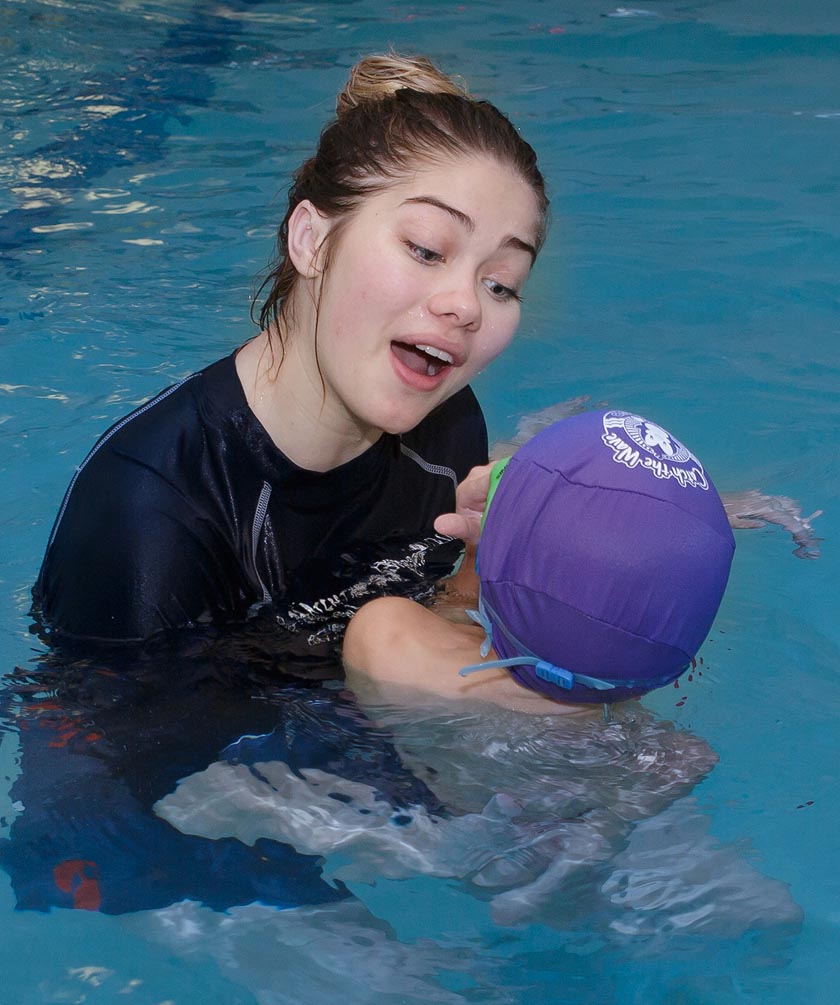
Adaptive sessons are designed for swimmers with a wide range of needs, including those with autism spectrum disorder (ASD), sensory processing differences, developmental delays, physical disabilities, communication challenges, ADHD, anxiety, or any swimmer who benefits from a calmer, more individualized approach.
Adaptive lessons are ideal for swimmers who benefit from:
We keep the process simple and predictable.


Tell us about your swimmer’s strengths, support needs, comfort level, and goals. This intake helps our team understand where to start and what kind of environment will support success.
After reviewing your intake, our team will:
A gentle first lesson focused on helping your swimmer feel safe and understood. We focus on:
Every adaptive swimmer receives a personalized roadmap to guide progress. Your ISP includes:
You’ll receive:
Adaptive lessons look different for every swimmer, but the heart of our approach remains the same — patient instruction built on trust, safety, and connection.


Catch the Wave Swim Club

Catch the Wave works with a variety of state, county, and private support programs that help families access adaptive swim lessons. This includes disability waiver services, long-term support programs, and assistance from nonprofits or community-based organizations.
We provide program-required documentation—such as attendance records, progress updates, and verification forms—to support your swimmer’s participation.
Some locations may also offer internal accessibility options for families who qualify. Availability varies by region.
After you complete the Adaptive Lessons Interest Form, your nearest Catch the Wave location will contact you to explain which funding or support options may be available and how we can best assist your family.
Answer a few questions about your swimmer so we can share exact pricing, availability, and the best lesson options for your child.

Yes. Every Catch the Wave coach receives training in sensory processing and adaptive teaching strategies. We do not treat adaptive lessons as an add-on or specialty track. Sensory integration, communication strategies, and behavioral support are built into our core instructor training. Many team members also pursue advanced certifications in adaptive instruction, ensuring your child works with a coach who understands how to connect, communicate, and adjust to their individual needs.
We are a judgment-free environment, and these responses are more common than many parents realize. Crying, hesitation, or refusal are often signs of anxiety or sensory dysregulation—not defiance. Our instructors use patience, routine, and trust-building techniques to help your child feel safe and regulated. In some cases, we may ask a parent to assist in the water temporarily to serve as a familiar “safety anchor” until the swimmer is ready to transition to independent work with the coach.
We create a customized curriculum based on your child’s unique profile and Adaptive Lesson Intake Form. Because no two swimmers are the same, we do not follow a rigid checklist. Before lessons begin, we review your intake information to build an Individualized Swim Plan (ISP), which guides instruction based on your child’s goals, sensory needs, and abilities. Whether the focus is water safety, elopement prevention, motor planning, or stroke development, the lesson is designed specifically for your child.
Most adaptive swimmers benefit from private (1:1) lessons to reduce sensory overload and allow for full class control. Group settings can introduce excessive visual, auditory, or social stimulation that may interfere with learning. Private lessons allow us to tailor the pace, communication style, and sensory input. In some cases, and depending on goals and readiness, group lessons can be an option.
In many cases, yes. Many Catch the Wave locations are approved vendors for state respite programs, disability waivers, and self-direction grants. Because every state and county operates different funding networks, you will need to check with your local Catch the Wave office to confirm which specific programs they are authorized to accept. We are happy to help provide the necessary invoices or documentation to support your funding requests.
Our goal is a productive lesson—defined by what your child needs on that day. For some swimmers, progress means building water competency and essential survival skills. For others, it may mean sensory regulation, motor coordination, or positive movement in the water. We meet each swimmer where they are while working toward meaningful, functional progress. Whether the focus is safety, confidence, or skill development, every lesson is intentional and purposeful.
We work with a wide range of swimmers who benefit from adaptive communication and sensory-aware teaching—including autism, ADHD, sensory processing differences, Down syndrome, cerebral palsy, anxiety, and other developmental or physical considerations. What matters most is your child’s unique profile, goals, and safety needs, which we review before lessons begin.
Yes, when it helps your child feel safe and regulated. For some swimmers, a parent can serve as a temporary “safety anchor” while the coach builds trust and routines. The goal is always to support independence over time, but we’ll use the right support at the right moment to keep progress positive.
Many locations can recommend quieter times or formats that reduce noise and stimulation. Because schedules differ by facility, your local office can help you choose a time that best fits your swimmer’s sensory needs.
Safety planning begins before lessons start. Coaches follow structured positioning, predictable routines, and clear boundaries to reduce risk, and parent involvement may be used when appropriate.
Many coaches use visual cues, routines, and consistent language to support understanding and predictability. Specific tools may vary based on your child’s needs.
In some cases, yes. Families must disclose relevant medical information in advance so safety plans and staffing considerations can be reviewed before enrollment.
While we strive for consistency whenever possible, especially for adaptive swimmers, we also plan intentionally for transitions when they’re needed. Coaches follow shared routines, communication strategies, and swimmer-specific notes so instruction remains familiar and supportive. If a change does occur, our team works to make the transition as smooth as possible, prioritizing regulation, trust, and continuity of progress rather than starting over.
Adaptive lessons are scheduled with sensory needs in mind when possible, and coaches manage pacing, transitions, and stimulation levels intentionally to support regulation.
Adaptive swim lessons are part of Catch the Wave’s core curriculum—not a separate or add-on program. Sensory-aware teaching, communication strategies, and emotional regulation support are built into instructor training and lesson planning across all programs.
No. Adaptive swim lessons are highly individualized, and progress varies based on each swimmer’s unique needs, regulation, and readiness. Our goal is always a productive lesson—whether that means safety skills, confidence, sensory regulation, or movement in the water—rather than a guaranteed outcome within a set timeframe.
No. Adaptive teaching is part of Catch the Wave’s core curriculum—not a separate program or track. Sensory awareness, communication strategies, and emotional regulation support are built into coach training across all lesson formats. Some swimmers benefit from private or semi-private lessons for additional structure, but accommodations do not require a special enrollment category or diagnosis.
To reinforce BraveSwim™ survival skills, we offer optional, age-appropriate Water Safety Challenges at no additional cost:
During these challenges, swimmers practice applying their survival skills fully clothed — entering the water and demonstrating age-appropriate safety responses in more realistic conditions.
Water Safety Challenges are offered on an ongoing basis throughout the year. Please check with your local Catch the Wave office for upcoming dates and availability.